The Intelligence Shift: Redefining How Firms Think, Work and Create Value in the Age of AI
Kacee Johnson, Principal at be radical, and Pete Miele, CEO at Qount, explore the state of AI in accounting and finance….
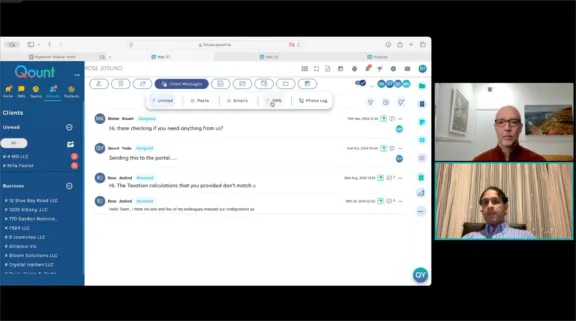
Uday Koorella (CIO & Co-Founder of Qount), Jim Boomer (CEO of Boomer Consulting Group), and Pete Miele (CEO of Qount), discuss how connected practice management technology can give CPA firms greater visibility into profitability, surface issues earlier, and turn firm data into better business decisions.

Chief Executive Officer at Qount

Co-Founder & Chief Innovation Officer
Firm profitability rarely comes down to one major problem. More often, margin is lost through dozens of smaller issues across the practice: engagements that were underpriced from the start, scope that expands without being captured, work that takes longer than expected, delayed billing, administrative inefficiencies, and clients showing signs of dissatisfaction before anyone realizes there is a problem.
In this live session, Jim Boomer, CEO of Boomer Consulting, will join Uday Koorella, Co-Founder & Chief Innovation Officer at Qount, and Pete Miele, CEO of Qount, to examine how firms can get better visibility into the operational factors that influence profitability and act on them earlier.
They’ll explore what changes when practice management is built around a connected platform and unified data model rather than information spread across disconnected systems. From engagement pricing and capacity to billing, client relationships, and firm-wide performance, the discussion will show how connected data can give leaders a clearer picture of what is happening across the firm and help AI surface risks and opportunities that might otherwise go unnoticed.
The session will also look beyond the practice management platform itself, including how APIs and MCP can make firm data available to Power BI, data warehouses, AI tools, and other systems. The result is a more connected approach to reporting and analysis that gives firms the information they need while there is still time to change the outcome.
Together, Jim, Uday, and Pete will explore how firms can move from looking backward at profitability to understanding what is driving it in real time, and use that visibility to make better decisions about pricing, people, clients, and growth.
Chief Executive Officer at Qount
With over 20 years of experience in the tax and accounting industry, Pete Miele is committed to helping businesses automate processes, optimize workflows, and overcome operational challenges. His career includes eight years as a tax accountant at Deloitte and nearly twenty years in leadership roles at SurePrep and Thomson Reuters, where he contributed to the growth and scaling of tech-enabled services. This combination of hands-on experience and leadership has given him a unique perspective on driving sustainable growth and operational efficiency for firms of all sizes. He is passionate about transforming the tax and accounting community, empowering professionals to thrive in a rapidly evolving landscape.
When he is not working, he enjoys spending time with family and hitting golf balls into sand and water hazards.
Co-Founder & Chief Innovation Officer
I lead the technology teams at Qount with a vision for the future of the accounting and finance industries. I’m passionate about solving complex challenges and developing innovative, scalable solutions that enhance the efficiency and productivity of Qount customers.
Before Qount, I led engineering and product teams at Intuit, tackling intricate problems and building impactful technology. With a background in mechanical engineering and a strong foundation in math and operations research, I’ve dedicated my career to driving transformation through technology.
Outside of work I enjoy spending time with my family, traveling, reading, and playing sports… except golf. That’s mostly frustrating.
Kacee Johnson, Principal at be radical, and Pete Miele, CEO at Qount, explore the state of AI in accounting and finance….
The 40-hour firm: Work less, earn more with a subscription business model
Are you trapped in long hours and high…
About the webinar
As part of his longstanding ChatGPT webinar series on CPAacademy.org, Hector Garcia will provide updates on the latest ChatGPT features that accounting firms can benefit from, including new integrations…
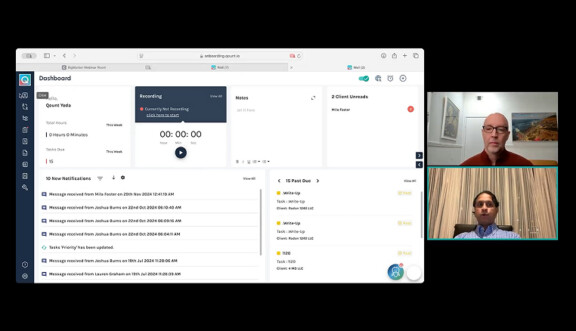
This webinar will give you the 101 about Qount, a thorough software demo, and an interview with a happy Qustomer. In the interest of saving you some time, here's where you can find key information…
One Platform. Total Visibility.
In your demo, we’ll show how Qount ties together the work, client communication, documents, and billing. You’ll see exactly how firms spot blocked steps, capacity pressure, scope drift, and billing gaps earlier, and why that translates into higher realization, better utilization, and margin recovery.